Press Releases, Media Mentions, & Podcasts

Reflections of Life: Distinguishing Living from Nonliving Worlds with Complexity Metrics
Astrobiology — June 2026
Earth and Mars, two worlds that may once have been twins, read here as stand-ins for distant exoplanets. The question — can the sheer complexity of a planet's reflected light betray whether something is alive beneath it?
Astrobiology — June 2026
Earth and Mars, two worlds that may once have been twins, read here as stand-ins for distant exoplanets. The question — can the sheer complexity of a planet's reflected light betray whether something is alive beneath it?

Evolving strategies in search for extraterrestrial civilizations
Centauri Dreams — May 2026
A survey of how we might recognize a technological civilization — X-ray and neutrino beacons, warp-drive wakes, the exotica at the field's edge. It set off a long comment thread, readers turning over gravitational-lens beacons, the disputed Palomar plate "glints," and whether SETI's silence is itself the signal.
Centauri Dreams — May 2026
A survey of how we might recognize a technological civilization — X-ray and neutrino beacons, warp-drive wakes, the exotica at the field's edge. It set off a long comment thread, readers turning over gravitational-lens beacons, the disputed Palomar plate "glints," and whether SETI's silence is itself the signal.

A new way to detect daisy worlds
Universe Today — November 2024
The daisy world model describes a hypothetical planet that self-regulates, maintaining a delicate balance involving its biogeochemical cycles, climate, and feedback loops that keep it habitable. It's associated with the Gaia Hypothesis developed by James Lovelock. How can we detect these worlds if they're out there?
Universe Today — November 2024
The daisy world model describes a hypothetical planet that self-regulates, maintaining a delicate balance involving its biogeochemical cycles, climate, and feedback loops that keep it habitable. It's associated with the Gaia Hypothesis developed by James Lovelock. How can we detect these worlds if they're out there?

A new way to detect daisy worlds
Phys.org — November 2024
A living planet can hold its own climate steady — the daisy-world idea, descended from Lovelock's Gaia. This coverage takes up the harder question: how would we catch one in the act from light-years away?
Phys.org — November 2024
A living planet can hold its own climate steady — the daisy-world idea, descended from Lovelock's Gaia. This coverage takes up the harder question: how would we catch one in the act from light-years away?
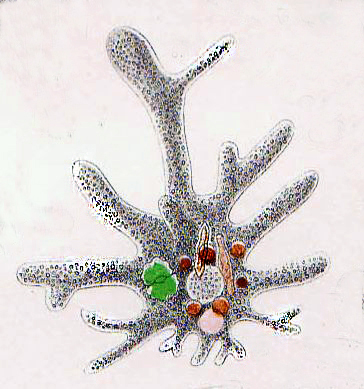
Physicists: Perhaps Life Is a Unique State of Matter
Mind Matters — July 2024
A physics gathering next week at the University of Rochester will explore the significance of the fact that life, unlike non-life, needs and uses information.
Mind Matters — July 2024
A physics gathering next week at the University of Rochester will explore the significance of the fact that life, unlike non-life, needs and uses information.

A new model for defining life across the Universe
Big Think — July 2024
Here, Adam Frank previews an upcoming workshop where scientists of various backgrounds will discuss the concept of life as information-driven states of matter, exploring how this perspective could redefine our understanding of what it means to be alive..
Big Think — July 2024
Here, Adam Frank previews an upcoming workshop where scientists of various backgrounds will discuss the concept of life as information-driven states of matter, exploring how this perspective could redefine our understanding of what it means to be alive..
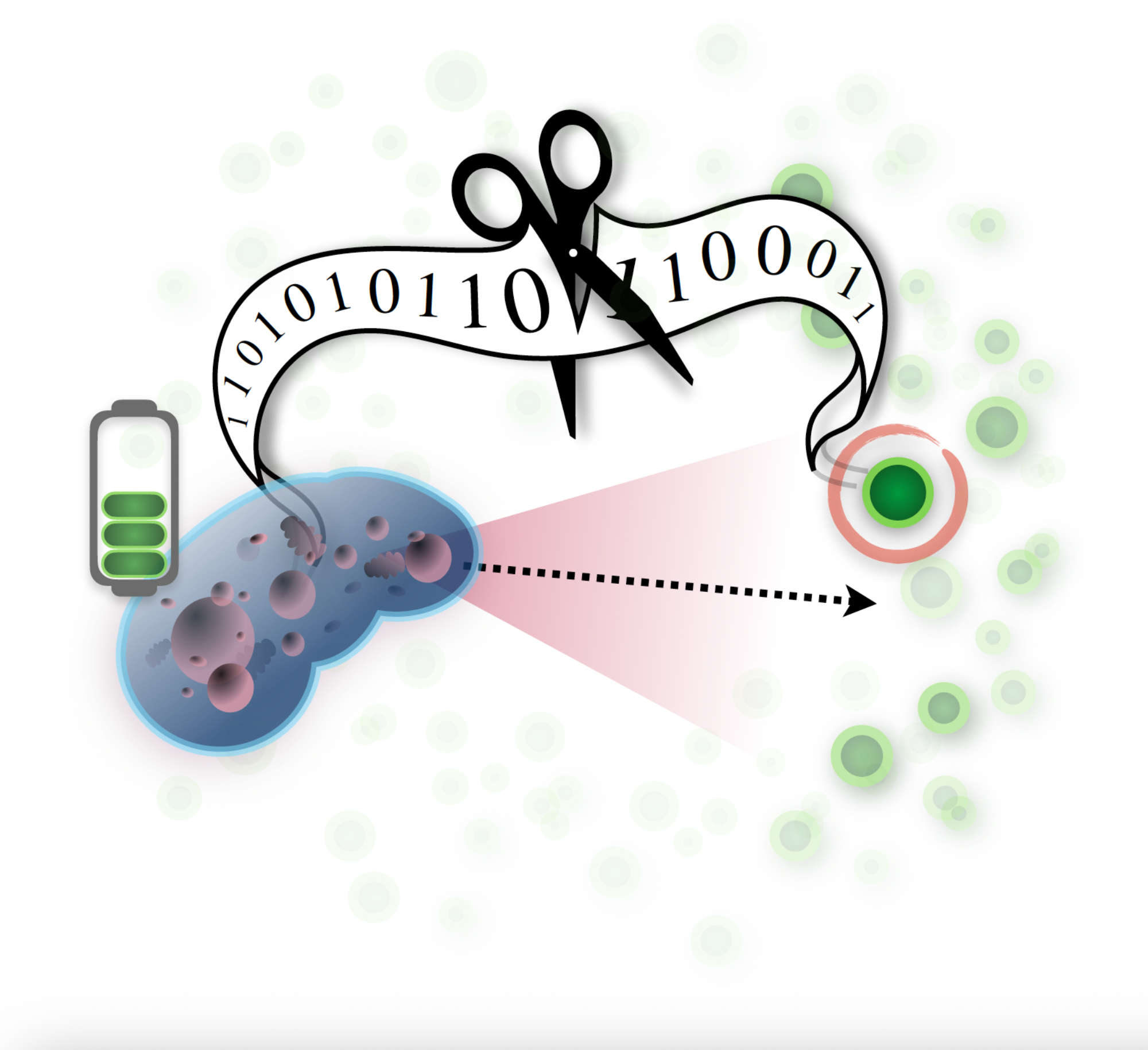
How do living things use meaningful information to survive?
University of Rochester — November 2023
SMART PHONES, SMART BIRDS: Birds gather, process, and communicate information about their environment. Smartphones do, too. The difference comes down to how the informational architectures in living things are intimately tied to self-preservation and reproduction. A team of physicists uses the theory of semantic information to address the questions, how much viability does a single bit of information provide? And how does viability change as more bits are added?
University of Rochester — November 2023
SMART PHONES, SMART BIRDS: Birds gather, process, and communicate information about their environment. Smartphones do, too. The difference comes down to how the informational architectures in living things are intimately tied to self-preservation and reproduction. A team of physicists uses the theory of semantic information to address the questions, how much viability does a single bit of information provide? And how does viability change as more bits are added?

Exploring The 'Universe' In A Video Game
NPR's 13.7 — December 2015
Shout out to my Ph.D. advisor for mentioning me while talking about No Man's Sky. I'm more of a Bethesda fan. :P
NPR's 13.7 — December 2015
Shout out to my Ph.D. advisor for mentioning me while talking about No Man's Sky. I'm more of a Bethesda fan. :P